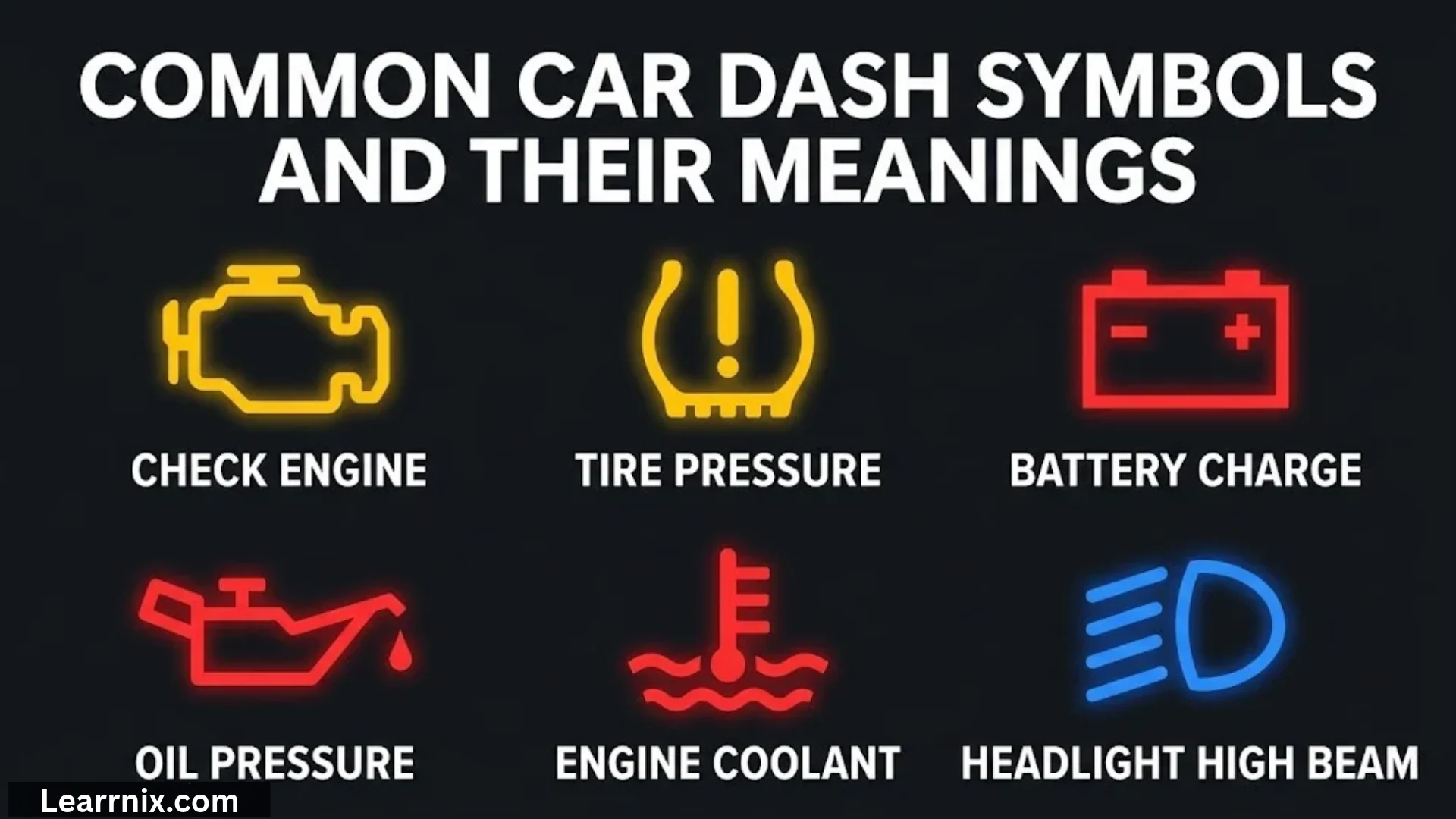
Car dash symbols help drivers understand what is happening inside their vehicles. Some symbols indicate that a feature is working normally, while others warn about problems involving the engine, brakes, battery, tires, or other important systems. Knowing what these symbols mean can help you respond quickly and avoid unnecessary damage.
Different car manufacturers use different dashboard designs and warning indicators. Toyota, Nissan, BMW, Hyundai, Audi, and smart cars may display similar symbols, but their meanings and warning procedures can vary by model and year. A symbol that looks familiar does not always indicate exactly the same issue in every vehicle.
In this guide, you will find common car dash symbols and their meanings, symbol names, warning light colors, manufacturer-specific indicators, and the unusual lightning bolt warning. You will also learn which dashboard lights require immediate attention and what steps to take when they appear.
Car Dashboard Symbols and Meanings
Car dashboard symbols are visual indicators that communicate information about your vehicle. They help you monitor important systems without needing to inspect the engine or other components manually. Some symbols provide useful information, while others alert you to faults that may affect your safety.
Here are some common dashboard symbols and their meanings:
| Dashboard Symbol | Name | Meaning |
| 🛢️ | Oil Pressure Warning | Engine oil pressure may be dangerously low. |
| 🌡️ | Engine Temperature | Engine coolant temperature is too high. |
| 🔋 | Battery Warning | Charging system or battery-related problem. |
| ⚙️ | Check Engine | Engine or emissions control system problem. |
| (!) | Brake Warning | Parking brake is engaged or a brake system issue exists. |
| ABS | ABS Warning | Anti-lock braking system fault. |
| 🚗 | Seat Belt Reminder | A seat belt needs to be fastened. |
| ⛽ | Low Fuel | Fuel level is getting low. |
| 🛞 | Tire Pressure Warning | One or more tires may have low pressure. |
| 🔒 | Security Indicator | Vehicle security or immobilizer system is active. |
| ↗️ | Turn Signal | A turn signal is operating. |
| 🚪 | Door Open | One or more doors are not properly closed. |
Note: Emoji are illustrative substitutes, not exact reproductions of manufacturer dashboard graphics.
Understanding Common Dashboard Symbol Categories
Most dashboard indicators fall into a few major categories:
- Engine Symbols: These indicate problems involving the engine, emissions, or engine management system.
- Safety Symbols: These relate to airbags, seat belts, brakes, and driver assistance features.
- Electrical Symbols: These provide information about the battery, alternator, and charging system.
- Temperature Symbols: These warn about engine overheating or cold operating conditions.
- Tire Symbols: These indicate low tire pressure or a tire monitoring system problem.
- Lighting Symbols: These show whether headlights, fog lights, or high beams are operating.
A dashboard symbol may remain illuminated because a feature is switched on or because a fault has been detected. Always consider its color, whether it flashes, and any accompanying message.
Car Dashboard Symbols With Names
Learning the names of dashboard symbols makes it easier to identify them when something unusual happens. Below is a more detailed reference list of commonly used indicators.
| Symbol Appearance | Name | What It Indicates |
| Oil Can | Engine Oil Pressure Light | Low engine oil pressure |
| Engine Outline | Malfunction Indicator Light | Engine or emissions fault |
| Battery Outline | Charging System Light | Charging system problem |
| Thermometer Over Waves | Coolant Temperature Light | Engine overheating |
| Circle With ABS | ABS Warning Light | Anti-lock braking fault |
| Tire With ! | TPMS Warning Light | Low tire pressure or monitoring fault |
| Person With Circle | Airbag/SRS Warning Light | Airbag system problem |
| Steering Wheel With ! | Power Steering Warning | Steering assistance problem |
| Car With Wavy Lines | Traction Control Indicator | Traction control activity or fault |
| Triangle With ! | Master Warning Light | General vehicle warning |
| Windscreen With Spray | Washer Fluid Indicator | Low windshield washer fluid |
| Fuel Pump | Fuel Level Indicator | Low fuel |
| Thermometer or Snowflake | Low Temperature Indicator | Cold outside temperature |
| Car With Open Door | Door Ajar Warning | A door is not fully closed |
| Circle With P | Parking Brake Indicator | Parking brake is engaged |
Some symbols look different depending on the manufacturer. For example, the tire pressure warning may appear as a horseshoe-shaped outline with an exclamation mark. The airbag indicator usually shows a seated person with a circle in front of them.
The best way to identify an unfamiliar symbol is to compare its appearance with the dashboard section of your vehicle’s owner’s manual.
Car Dashboard Warning Lights
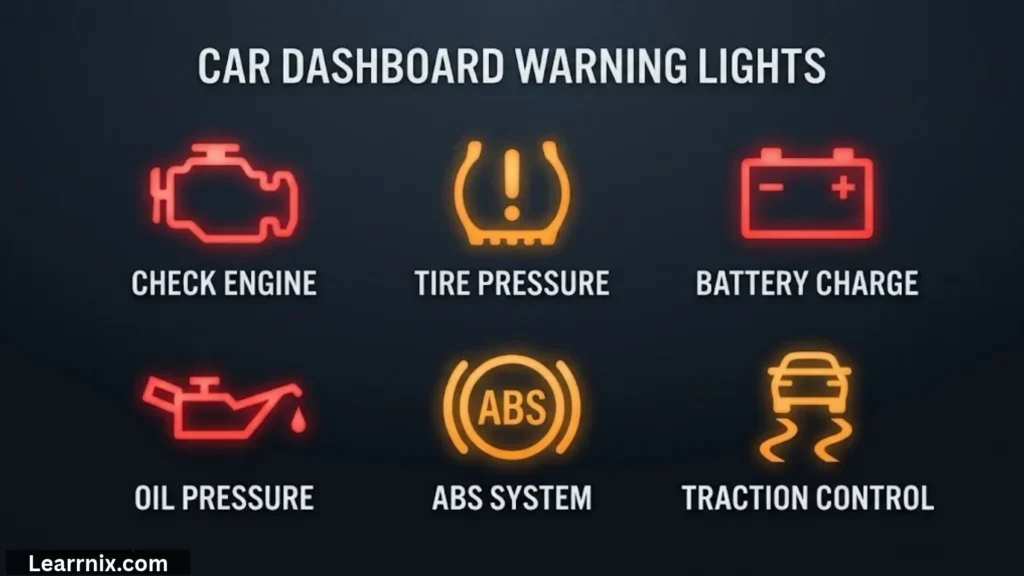
Car dashboard warning lights are designed to alert you when a vehicle system needs attention. Their colors often provide the first clue about how urgently you should respond.
Red Dashboard Warning Lights
Red warning lights usually indicate a serious problem or a condition requiring immediate attention.
Common examples include:
- Oil Pressure Light: Stop safely and switch off the engine. Low oil pressure can cause serious engine damage.
- Engine Temperature Light: Pull over safely and allow the engine to cool. Never remove a hot radiator cap.
- Brake Warning Light: Check whether the parking brake is engaged. If the light remains on or braking feels abnormal, stop driving.
- Battery Warning Light: The charging system may not be working correctly. Electrical power may eventually be lost.
- Airbag Warning Light: The airbag or restraint system may not function correctly in an accident.
- Seat Belt Warning: Fasten the seat belt before driving.
A flashing red warning can be especially urgent. Follow the vehicle’s displayed instructions and stop when it is safe to do so.
Yellow or Orange Dashboard Warning Lights
Yellow and orange lights generally indicate a fault, caution, or maintenance requirement.
Examples include:
- Check engine light
- ABS warning light
- Tire pressure warning
- Traction control warning
- Engine management warning
- Low fuel indicator
- Diesel particulate filter warning
- Power steering warning
Some yellow warnings allow you to continue driving carefully, but others require prompt inspection. A flashing check engine light, for example, can indicate a serious engine misfire. Reduce engine load and seek professional assistance.
Green Dashboard Indicators
Green symbols generally indicate that a feature is active or operating.
Common examples include:
- Turn signal indicators
- Low beam headlights
- Fog lights
- Cruise control status on some vehicles
- Lane assistance status on some models
- Automatic stop-start system status on certain vehicles
These lights usually do not indicate a fault.
Blue and White Dashboard Indicators
Blue and white indicators commonly provide information about vehicle settings or operating conditions.
- Blue High Beam Symbol: High beam headlights are switched on.
- Blue Temperature Symbol: Engine coolant is still cold.
- White Cruise Control Symbol: A driving assistance feature may be available or on standby.
- White Lane Assistance Symbol: A driver assistance system may be ready but not actively controlling the vehicle.
The exact meaning depends on the car’s equipment and dashboard design.
Toyota Car Dashboard Symbols and Meanings
Toyota vehicles use a range of dashboard indicators to communicate the condition of their engine, braking system, electrical components, and safety features. The exact symbols depend on the Toyota model, manufacturing year, and available equipment.
Some common Toyota dashboard symbols include:
| Symbol or Appearance | Name | Meaning |
| Engine Outline | Check Engine Light | Possible engine or emissions system fault. |
| Oil Can | Low Oil Pressure | Engine oil pressure is too low. |
| Battery | Charging System Warning | A charging system malfunction has been detected. |
| Circle With ABS | ABS Warning | Anti-lock braking system malfunction. |
| Car With Wavy Lines | Slip Indicator | Vehicle stability or traction control is operating. |
| Steering Wheel With ! | EPS Warning | Electric power steering system problem. |
| Person With Circle | SRS Airbag Warning | Possible airbag system malfunction. |
| Tire With ! | Tire Pressure Warning | Low tire pressure or a TPMS malfunction. |
| Triangle With ! | Master Warning | Another vehicle warning requires attention. |
| Fuel Pump | Low Fuel Warning | Fuel level is low. |
Toyota Slip Indicator and Traction Control Symbols
The slip indicator usually looks like a car with curved lines underneath it. It may flash when the tires lose traction and the vehicle stability or traction control system intervenes.
If the indicator stays illuminated, the system may have been switched off or detected a malfunction. Check the vehicle display for additional information.
Toyota Master Warning Light
A Toyota master warning light often appears as a triangle containing an exclamation mark. It alerts the driver that the vehicle has detected a condition requiring attention.
The triangle does not identify the exact problem by itself. Look for a message on the multi-information display to understand what needs to be checked.
Toyota VSC and TRAC OFF Symbols
- VSC OFF: Vehicle Stability Control has been switched off or is unavailable.
- TRAC OFF: Traction control has been disabled.
- Slip Indicator: Traction or stability assistance is operating.
Toyota provides model-specific descriptions for these indicators. Some safety system warnings require immediate professional inspection.
Car Dashboard Symbols and Meanings Nissan
Nissan dashboard symbols help drivers monitor engine performance, braking, tire pressure, and vehicle safety systems. Different Nissan models, including the Altima, Sentra, Maxima, Rogue, Patrol, and X-Trail, may have different instrument layouts.
Here are several common Nissan dashboard indicators:
| Symbol Appearance | Name | Meaning |
| Engine Outline | Check Engine | Engine or emissions system problem. |
| Circle With ABS | ABS Warning | Anti-lock braking system fault. |
| Red Oil Can | Oil Pressure Warning | Low engine oil pressure. |
| Battery | Battery Warning | Charging system problem. |
| Thermometer Over Waves | Coolant Temperature | Engine temperature is too high. |
| Tire With ! | Tire Pressure Warning | One or more tires may be underinflated. |
| Car With Wavy Lines | VDC/Slip Indicator | Vehicle Dynamic Control or traction activity. |
| Steering Wheel With ! | Power Steering Warning | Electric power steering problem. |
| Person With Circle | Airbag Warning | Supplemental restraint system fault. |
| Fuel Pump | Low Fuel | Fuel level is getting low. |
Nissan VDC and Slip Indicator
Nissan vehicles may use Vehicle Dynamic Control (VDC) to help maintain stability when the tires lose traction.
A flashing slip indicator can mean the system is actively controlling wheel spin. If the VDC OFF light appears, the system may have been manually disabled.
Nissan Service Engine Soon Light
The Service Engine Soon indicator is associated with the engine management and emissions systems. It can illuminate when the vehicle’s computer detects an abnormal condition.
A steady light generally requires diagnosis soon. A flashing check engine warning can indicate a more serious problem, so reduce driving and seek professional assistance.
Nissan Brake and Coolant Warnings
A brake warning may indicate that the parking brake is engaged or that the brake system needs attention. A coolant temperature warning indicates that the engine is overheating.
If either warning remains illuminated after checking the relevant basic condition, follow the owner’s manual and arrange an inspection.
Different Car Dash Symbols
Different car dash symbols are designed to communicate specific information about vehicle operation. Although manufacturers may use slightly different graphics, many dashboard indicators follow familiar visual patterns.
The following categories cover additional symbols that drivers frequently encounter.
Engine and Transmission Symbols
- Engine Outline: Check engine or malfunction indicator.
- Gear With Exclamation Mark: Possible transmission or gearbox problem.
- Wrench Symbol: Service requirement or maintenance warning on some vehicles.
- Glow Plug Symbol: Diesel engine preheating or glow plug system status.
- DPF Symbol: Diesel particulate filter requires attention or regeneration.
- EPC Symbol: Electronic power control system warning on certain vehicles.
Brake and Safety Symbols
- Circle Containing P: Parking brake indicator.
- Circle Containing !: Brake system warning.
- ABS Inside a Circle: Anti-lock braking system warning.
- Person With an Airbag: Supplemental restraint system warning.
- Car With Wavy Lines: Electronic stability or traction control.
- Two Cars With a Star: Possible collision warning or automatic emergency braking indicator.
Lighting Symbols
- Green Headlamp With Straight Lines: Low beam headlights.
- Blue Headlamp With Horizontal Lines: High beam headlights.
- Green Fog Lamp Symbol: Front fog lights are active.
- Amber Rear Fog Lamp: Rear fog lights are active.
- Green Arrows: Turn signals or hazard lights.
Other Useful Dashboard Indicators
- Snowflake: Cold weather or possible icy-road warning.
- Steering Wheel: Steering assistance status or malfunction.
- Car With Key: Immobilizer or key recognition status.
- Windscreen With Water Spray: Washer fluid or windshield cleaning system.
- Car With Open Doors: Door or tailgate is not properly closed.
Remember that a symbol’s shape alone may not tell the complete story. Its color, flashing pattern, and accompanying dashboard message are equally important.
Car Dash Symbols and What They Mean
Understanding car dash symbols and what they mean becomes easier when you connect each symbol with the vehicle system it represents.
Here are some important examples explained in everyday language.
| Dashboard Symbol | What It Means | Recommended Action |
| Red Oil Can | Low engine oil pressure | Stop safely and switch off the engine. |
| Red Thermometer | Engine overheating | Stop safely and allow the engine to cool. |
| Yellow Engine | Engine management problem | Arrange a diagnostic check. |
| Red Battery | Charging system fault | Stop safely if necessary and seek assistance. |
| Yellow Tire With ! | Low tire pressure | Check and adjust tire pressure. |
| ABS | Anti-lock braking fault | Have the braking system inspected. |
| Airbag | Airbag system fault | Arrange professional inspection. |
| Steering Wheel With ! | Steering assistance problem | Stop if steering becomes difficult or unsafe. |
| Triangle With ! | General vehicle warning | Read the dashboard message. |
| Fuel Pump | Low fuel level | Refuel soon. |
What Happens When a Dashboard Symbol Flashes?
A flashing indicator often means that a system is actively operating or that a warning condition needs immediate attention.
For example, a flashing turn signal is normal. A flashing check engine light, however, can indicate an engine misfire that may damage the catalytic converter.
Never assume that every flashing symbol is harmless. Identify the symbol before deciding whether to continue driving.
Why Do Several Dashboard Symbols Appear Together?
Sometimes multiple warning lights illuminate at the same time. This can happen because several vehicle systems depend on the same electrical supply, sensor, or control module.
For example, a charging system problem may trigger additional electronic warnings. A fault in an ABS system may also affect traction or stability assistance.
If several unrelated warnings appear suddenly, have the vehicle diagnosed instead of replacing individual parts based only on dashboard lights.
BMW Car Dash Symbols
BMW uses a combination of warning lamps, instrument cluster messages, and iDrive notifications to communicate vehicle conditions. Depending on the model, these indicators may appear on a traditional dashboard or a digital display.
Common BMW dashboard symbols include:
| Symbol Appearance | Name | Meaning |
| Engine Outline | Check Control Engine Warning | Engine or emissions fault. |
| Oil Can | Engine Oil Pressure | Possible low oil pressure. |
| Battery | Charging System | Electrical charging problem. |
| Tire With ! | Flat Tire Monitor/TPM | Tire pressure problem or monitoring fault. |
| Circle With ABS | ABS Warning | Anti-lock braking fault. |
| Car With Wavy Lines | DSC Indicator | Dynamic Stability Control activity or fault. |
| Steering Wheel With ! | Steering System Warning | Steering assistance problem. |
| Person With Circle | Airbag Warning | Restraint system malfunction. |
| Triangle With ! | General Warning | A vehicle condition needs attention. |
BMW DSC and Traction Control Symbols
Dynamic Stability Control (DSC) helps maintain vehicle stability by managing braking and engine power when the car loses traction.
A flashing DSC indicator generally means the system is intervening. A continuously illuminated warning may indicate that DSC has been switched off or has developed a fault.
BMW Check Control Messages
BMW vehicles often provide additional explanations through the Check Control system.
For example, a tire pressure warning may be accompanied by a message identifying the affected tire or asking you to check tire pressure. The iDrive vehicle status menu can also display information about engine oil, tire pressure, and required services.
The exact meaning depends on the vehicle’s equipment and software. BMW provides digital owner’s manuals and vehicle-specific guidance through its official owner resources.
Nissan Car Dash Symbols
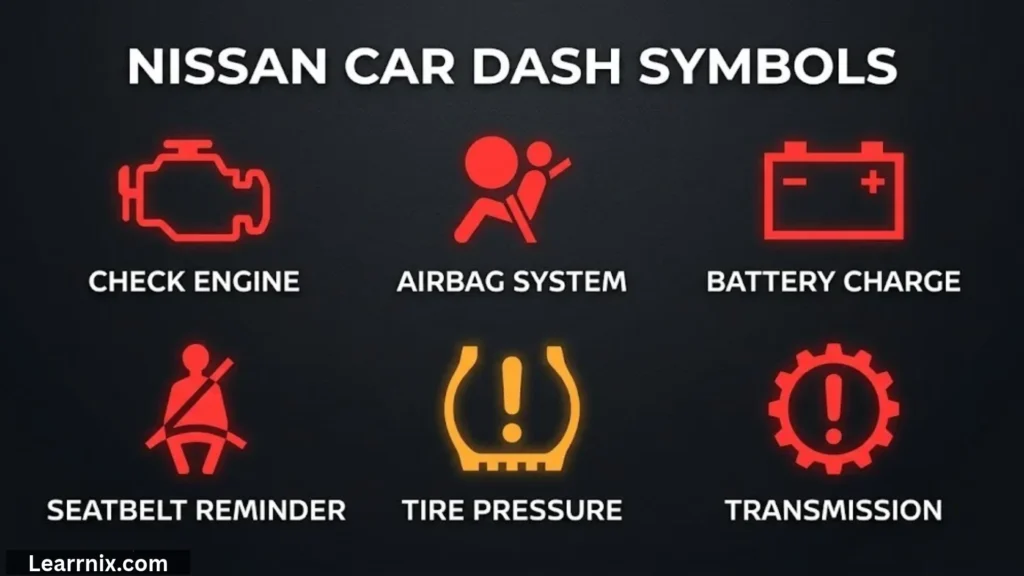
Nissan car dash symbols deserve separate attention because some indicators have multiple operating states. A symbol may flash during normal operation but remain illuminated when a system has detected a fault.
Here are additional Nissan indicators that drivers should recognize:
- O/D OFF: Indicates that overdrive has been disabled on vehicles equipped with this transmission feature.
- Cruise Control Indicator: Shows that cruise control is switched on or ready.
- Security Light: Indicates that the vehicle’s anti-theft system is active.
- 4WD Warning: Indicates a four-wheel-drive system condition or malfunction.
- Master Warning Light: Alerts the driver to a message or problem requiring attention.
- Low Washer Fluid: Indicates that windshield washer fluid needs refilling.
- Forward Emergency Braking Warning: Provides information about the emergency braking assistance system.
- Power Steering Warning: Indicates a possible problem with steering assistance.
Nissan O/D OFF Light Meaning
O/D stands for overdrive. When the O/D OFF indicator is illuminated, the transmission’s overdrive function has been disabled.
This can be useful in certain driving conditions, such as when additional engine braking is needed. However, the correct operating procedure depends on the transmission and model.
Nissan 4WD Warning Light
Some Nissan SUVs and pickup trucks have four-wheel-drive indicators. These may show when four-wheel drive is engaged or alert the driver to a malfunction.
If the 4WD warning flashes or remains illuminated unexpectedly, consult the vehicle’s manual before continuing in difficult driving conditions.
Funny Car Dash Symbols
Some car dash symbols look unusual, confusing, or even funny when drivers see them for the first time. Their unusual shapes can make them look like small cartoons or mysterious pictures.
However, these indicators usually have practical meanings.
Common Funny-Looking Dashboard Symbols
| Symbol Appearance | Common Name | Why It Looks Unusual |
| 🐢 | Turtle Mode | Looks like a turtle and may indicate reduced power in some EVs. |
| 🚗〰️ | Slippery Road Indicator | Looks like a car sliding across a road. |
| 🚘❄️ | Icy Road Warning | Combines a vehicle and snowflake to indicate cold conditions. |
| 🚙👁️ | Driver Assistance Indicator | Can look like a vehicle watching the road. |
| ☕ | Coffee Cup Warning | Some vehicles use a cup to suggest taking a break. |
| 🚗↔️ | Lane Assistance | Represents lane positioning or lane departure assistance. |
These emoji are visual descriptions, not exact dashboard graphics. Not every vehicle includes these indicators.
Why Do Some Dashboard Symbols Look Like Cartoons?
Manufacturers use simple pictures because drivers need to recognize warnings quickly. A picture of a car sliding is easier to associate with traction problems than a long technical message.
Some newer vehicles also display playful-looking graphics for driver assistance, driving modes, and electric vehicle power limitations.
The turtle symbol, for example, is commonly associated with reduced power or limited performance in certain electric vehicles. Its exact meaning should be checked in the relevant manual.
Hyundai Car Dash Symbols
Hyundai vehicles use dashboard warning lights for engine management, safety systems, battery charging, tire pressure, and driver assistance features.
Popular Hyundai models such as the Elantra, Sonata, Tucson, Santa Fe, and Creta may use different dashboard layouts, but many common indicators are similar.
| Symbol Appearance | Name | Meaning |
| Engine Outline | Malfunction Indicator | Engine or emissions system problem. |
| Oil Can | Oil Pressure Warning | Low engine oil pressure. |
| Battery | Charging System Warning | Charging system malfunction. |
| Tire With ! | TPMS Warning | Low tire pressure or TPMS fault. |
| Circle With ABS | ABS Warning | Anti-lock braking problem. |
| Person With Circle | Airbag Warning | SRS system malfunction. |
| Car With Wavy Lines | ESC Indicator | Electronic Stability Control activity. |
| Steering Wheel With ! | MDPS Warning | Motor Driven Power Steering problem. |
| Triangle With ! | Master Warning | A vehicle system needs attention. |
| P Inside a Circle | EPB Warning | Electronic parking brake condition. |
Hyundai ESC and MDPS Indicators
Electronic Stability Control helps reduce wheel slip and maintain stability during certain driving conditions. A flashing ESC indicator can mean the system is working.
The MDPS warning relates to the electric steering assistance system. If it remains illuminated, steering effort may change and the vehicle should be inspected.
Hyundai Electric Vehicle Dashboard Symbols
Hyundai electric vehicles have additional indicators that are not found in conventional petrol or diesel cars.
These include:
- READY: Indicates that the electric vehicle is ready to drive.
- Battery Warning: May indicate a problem with the charging or electrical system.
- Power Limited: Indicates reduced available driving power.
- Regenerative Braking: Shows the status of energy recovery during deceleration.
- High-Voltage System Warning: Indicates a condition involving the vehicle’s high-voltage electrical system.
Hyundai’s owner manuals explain that warning light shapes and positions can differ according to vehicle specifications and software versions.
Smart Car Dash Symbols
Smart cars have distinctive dashboard indicators because many models use compact vehicle designs and electric powertrains. Their instrument displays communicate information about battery charge, driving readiness, vehicle safety, and system faults.
The exact indicators vary between older smart fortwo models and newer electric smart vehicles.
Common smart car dashboard symbols include:
| Symbol Appearance | Name | Meaning |
| Battery Outline | Battery Warning | Electrical system or battery-related issue. |
| READY | Ready Indicator | Electric vehicle is ready to drive. |
| Turtle | Reduced Power | Limited vehicle performance. |
| Tire With ! | Tire Pressure Warning | Low tire pressure. |
| Engine Outline | Engine Warning | Engine management fault on combustion models. |
| ABS | ABS Warning | Anti-lock braking system fault. |
| Person With Circle | Airbag Warning | Airbag system problem. |
| Car With Wavy Lines | ESP Indicator | Electronic stability control activity or fault. |
| Plug Symbol | Charging Indicator | Charging connection or charging status. |
Smart Electric Car Battery Indicators
Electric smart models use battery-related symbols to show available charge and electrical system conditions.
A low battery indication means that the remaining driving range is limited. A charging warning may indicate that the vehicle is not charging as expected or that a charging system fault has occurred.
Smart Car Turtle Symbol
A turtle-shaped indicator can represent reduced power. In an electric vehicle, this may happen when battery charge is low or when the system limits performance because of operating conditions.
If the turtle appears alongside a warning message, follow the instructions displayed on the instrument panel.
Car Dash Symbols Lightning Bolt
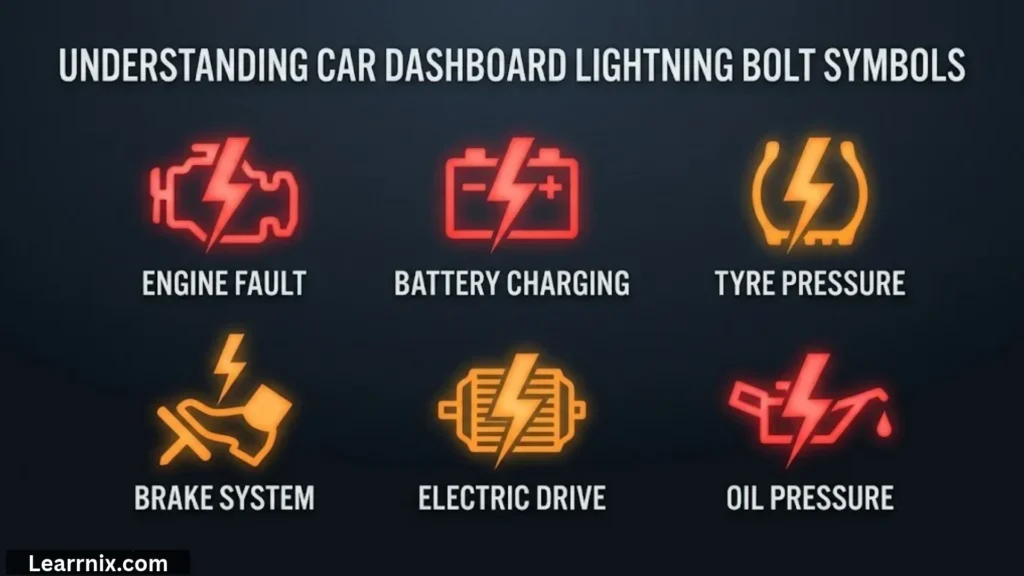
The lightning bolt dashboard symbol is one of the more unusual indicators drivers may encounter. On certain vehicles, particularly some Chrysler, Dodge, and Jeep models, a lightning bolt between two curved brackets represents the Electronic Throttle Control (ETC) system.
Lightning Bolt Warning: ϟ
Illustrative character, not the exact manufacturer warning lamp.
Meaning: A possible fault in the electronic throttle control system.
What Is Electronic Throttle Control?
Electronic Throttle Control is a system that manages the engine’s throttle electronically. Instead of relying entirely on a traditional mechanical connection, sensors and electronic controls communicate the driver’s accelerator input to the throttle.
This system helps regulate engine power and acceleration.
Why Does the Lightning Bolt Warning Appear?
Possible causes include:
- Faulty throttle position sensor.
- Electronic throttle body malfunction.
- Accelerator pedal sensor problem.
- Damaged wiring or electrical connections.
- Communication problems between engine control components.
- Electronic throttle control system malfunction.
These are possible causes, not a diagnosis. A professional scan is needed to identify the actual fault.
What Should You Do When the Lightning Bolt Light Appears?
- Reduce your speed and avoid sudden acceleration.
- Check whether the vehicle responds normally to the accelerator.
- If the engine loses power, stalls, or behaves unpredictably, stop somewhere safe.
- Consult the owner’s manual for model-specific instructions.
- Arrange a diagnostic inspection if the warning remains illuminated.
Do not assume that restarting the engine has fixed the issue simply because the light disappears temporarily. If the vehicle enters reduced-power mode or the warning flashes, seek professional assistance.
Important: The lightning bolt does not have one universal meaning across all car brands. Always identify the manufacturer and exact dashboard design before interpreting it.
What Do Car Dash Symbols Mean
Car dash symbols communicate the operating condition of different vehicle systems. They can tell you whether a feature is active, whether maintenance is required, or whether a component has developed a fault.
For example, a green headlight symbol generally shows that a lighting function is active. A red oil pressure symbol indicates a potentially serious engine lubrication problem.
How to Identify an Unfamiliar Dashboard Symbol
Use these simple steps:
- Look at the Shape: Identify whether the symbol represents an engine, battery, tire, steering wheel, or another component.
- Check Its Color: Red usually means urgent attention, while amber generally indicates caution.
- Notice Whether It Flashes: Flashing can indicate active system operation or a serious warning.
- Read the Display Message: Modern vehicles often provide additional information beside the warning.
- Check the Owner’s Manual: Find the exact symbol and its recommended response.
Do All Dashboard Symbols Mean Something Is Wrong?
No. Many dashboard indicators simply show that a vehicle feature is working.
For example, a green turn signal means that the indicator is operating. A blue high beam symbol shows that the high beam headlights are switched on.
Some warning lights also illuminate briefly when you start the vehicle. This is part of the instrument cluster’s self-check process. If a warning remains on after the vehicle starts, investigate its meaning.
Can You Drive With a Dashboard Warning Light On?
It depends on the symbol and the vehicle’s condition.
A green cruise control indicator normally does not prevent driving. A red oil pressure warning, overheating warning, or serious brake warning requires immediate attention.
Never continue driving simply because the car still feels normal. Some mechanical problems can cause serious damage before noticeable symptoms develop.
Audi Car Dash Symbols
Audi dashboard symbols are designed to provide information about engine performance, electrical systems, braking, safety features, and driving assistance technologies.
Depending on the model, Audi uses warning lamps, colored indicators, and messages displayed through its Virtual Cockpit or instrument cluster.
Here are some commonly recognized Audi dashboard symbols:
| Symbol Appearance | Name | Meaning |
| Red Oil Can | Oil Pressure Warning | Engine oil pressure may be too low. |
| Engine Outline | Check Engine | Engine management problem. |
| EPC | Electronic Power Control | Possible electronic engine control fault. |
| Tire With ! | Tire Pressure Warning | Tire pressure problem. |
| Circle With ABS | ABS Warning | Anti-lock braking system malfunction. |
| Battery | Electrical System Warning | Electrical charging system problem. |
| Person With Circle | Airbag Warning | Airbag or restraint system fault. |
| Steering Wheel With ! | Steering System Warning | Steering assistance problem. |
| Triangle With ! | Central Warning | A vehicle system needs attention. |
| Thermometer Over Waves | Coolant Temperature | Cooling system or overheating warning. |
Audi EPC Warning Light
EPC stands for Electronic Power Control. This warning is commonly associated with the electronic engine management and throttle control systems in applicable Audi models.
Possible causes include:
- Throttle body problems.
- Accelerator pedal sensor faults.
- Brake light switch malfunction.
- Engine management sensor problems.
- Electrical connection issues.
When the EPC warning appears, engine performance may be reduced. Have the vehicle scanned to identify the actual cause.
Audi Oil Pressure Warning
The red oil pressure symbol is one of the most important warnings to recognize.
It indicates that the engine may not be receiving adequate oil pressure. Stop safely, switch off the engine, and follow the instructions in the owner’s manual. Checking the oil level alone does not confirm that oil pressure is normal.
Audi Yellow and Red Warning Symbols
Audi generally uses red warnings for serious conditions and yellow warnings for faults or conditions requiring attention.
For example:
- Red Oil Pressure: Stop the engine.
- Red Brake Warning: Check the braking system immediately.
- Yellow Engine Warning: Arrange an engine diagnostic check.
- Yellow Tire Warning: Check tire pressures and inspect for damage.
- Yellow EPC: Have the electronic engine control system inspected.
Audi recommends using the owner’s manual matched to the vehicle’s model and year because warning indicators and their meanings can vary.
Frequently Asked Questions
What is the most serious warning light on a car dashboard?
The red oil pressure, engine overheating, and brake system warning lights are among the most serious. They can indicate problems that affect engine operation or driving safety. Stop safely and follow the vehicle’s instructions.
What does a yellow triangle with an exclamation mark mean?
A yellow triangle with an exclamation mark commonly represents a master warning. It means the vehicle has detected a condition that needs attention. Check the instrument display for a more specific message.
Why do dashboard lights come on when starting a car?
Most vehicles perform an instrument cluster self-check when the ignition is switched on. Several warning lights illuminate briefly and then turn off if their systems pass the check. A light that stays on may require investigation.
What does a flashing check engine light mean?
A flashing check engine light can indicate an engine misfire or another serious engine management problem. Reduce engine load, avoid unnecessary driving, and arrange professional diagnosis as soon as possible.
Can a car dashboard warning light disappear by itself?
Yes, some warning lights disappear when a temporary condition is resolved. For example, a tire pressure warning may turn off after correcting the pressure. However, a disappearing light does not always mean the underlying problem has been permanently fixed.
Conclusion
Car dash symbols provide valuable information about your vehicle’s condition and help you recognize potential problems before they become more serious. Understanding their names, colors, and meanings makes it easier to identify engine, battery, brake, tire, and safety system warnings.
Toyota, Nissan, BMW, Hyundai, smart, and Audi vehicles use many familiar dashboard indicators, but their designs and specific meanings can differ. Unusual symbols, including the lightning bolt and turtle indicators, also have important functions that drivers should understand.
The best approach is to learn the common warning lights, pay attention to dashboard messages, and consult your vehicle’s owner’s manual whenever an unfamiliar symbol appears. Never ignore a serious red warning, and get persistent or unusual warnings checked by a qualified mechanic.

I am Charlotte Anderson, an education writer who is passionate about creating meaningful learning resources for students and lifelong learners.
I enjoy researching new educational approaches and sharing ideas that make studying easier and more effective.
Through my work, I aim to inspire curiosity, confidence, and a love for learning.
Books:
- The Complete Guide to Better Learning
- Building Skills for Academic Success
 Daniel Harper
 Michael Carter