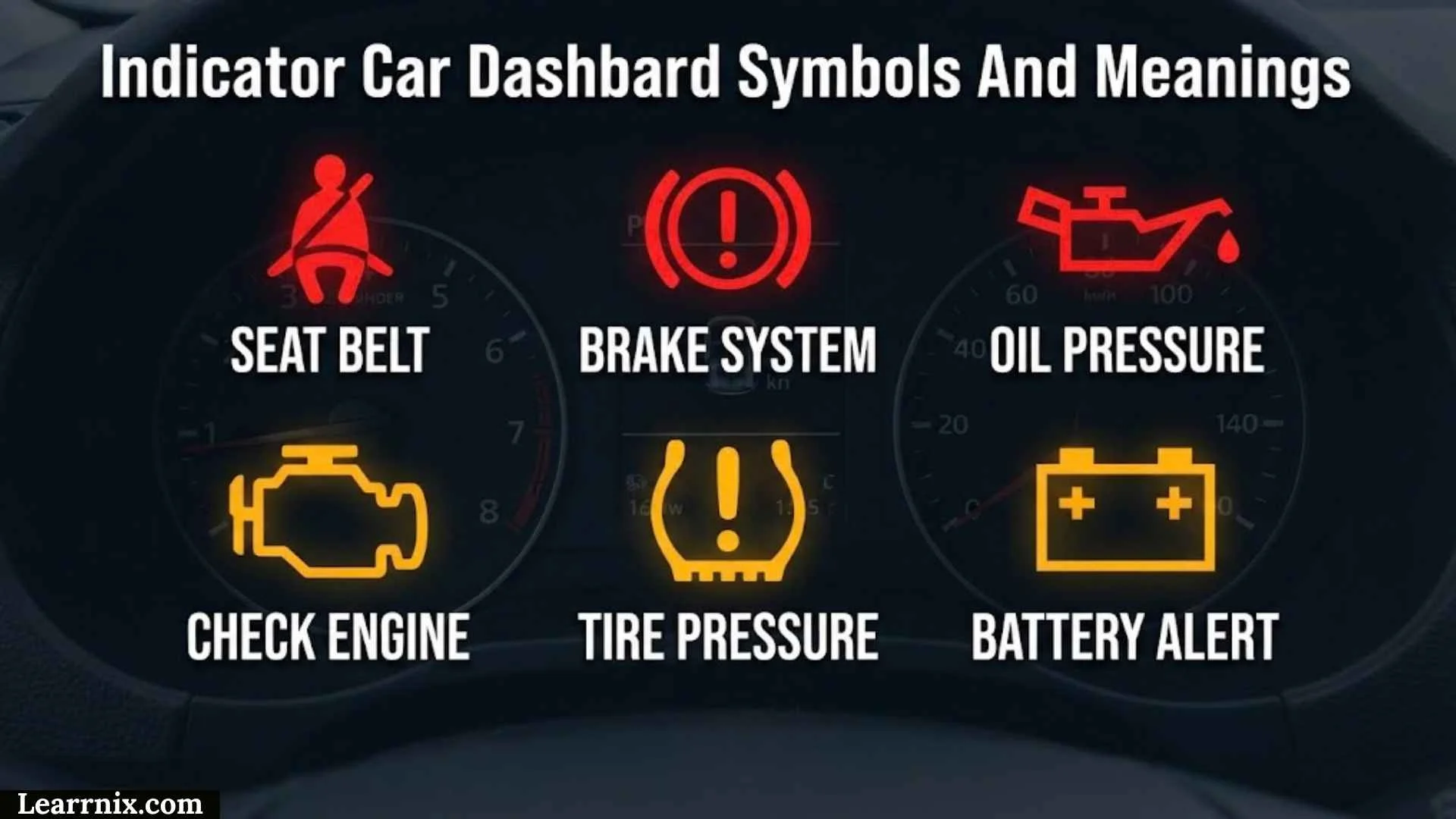
Car dashboard symbols are your vehicle’s way of communicating important information while you drive. Some symbols simply show that a feature is active, while others warn you about a possible problem with the engine, brakes, tires, battery, oil, or another vehicle system.
Understanding indicator car dashboard symbols and meanings can help you recognize a warning quickly and decide what action may be needed. Dashboard lights are commonly divided into different colors, with red generally indicating a more urgent condition, yellow or amber showing that attention may be needed, and green or blue usually showing an active feature or status.
In this guide, you will learn the names and meanings of common dashboard symbols, how to recognize them by their appearance, and what different warning colors can mean. You will also find useful information about Toyota and Nissan dashboard symbols, diesel-specific indicators, yellow warning lights, and practical tips for dealing with unfamiliar symbols.
Car Dashboard Symbols With Names
Car dashboard symbols may look slightly different between manufacturers, but many use familiar shapes and visual conventions. Learning the most common symbols makes it easier to understand your vehicle without immediately searching for every warning.
Here are some common dashboard symbols with their names and general meanings:
| Symbol | Name | Meaning |
| 🛢️ | Oil Pressure Warning | Possible low engine oil pressure |
| 🔋 | Battery/Charging Warning | Possible charging-system problem |
| 🌡️ | Engine Temperature Warning | Engine temperature may be too high |
| 🚗 | Check Engine | Engine or emissions-related fault detected |
| ABS | ABS Warning | Possible anti-lock braking system problem |
| ⭕! | Brake Warning | Parking brake may be engaged or brake system may need attention |
| 🛞! | Tire Pressure Warning | One or more tires may have low pressure |
| ⚠️ | Master Warning | Vehicle has detected a warning condition |
| ⛽ | Low Fuel | Fuel level is low |
| 🚪 | Door Open | A door, trunk, or hood may not be fully closed |
| 💺 | Seat Belt Reminder | Seat belt needs to be fastened |
| ↔️ | Turn Signal | Turn indicator is operating |
| 💡 | Light Indicator | An exterior lighting function is active |
| 🔵 | High-Beam Indicator | High-beam headlights are switched on |
The actual dashboard graphic can vary by vehicle. For example, a tire-pressure warning often looks like a curved tire outline containing an exclamation mark, while the oil-pressure warning commonly resembles an oil can with a drop.
Not every illuminated symbol represents a fault. Turn signals, high beams, cruise control, and some driver-assistance indicators simply tell you that a particular function is operating.
Car Dashboard Symbols and Meanings With Pictures
Pictures can make dashboard symbols much easier to identify because many drivers remember the shape of a warning light before they remember its name.
Engine Warning Symbol
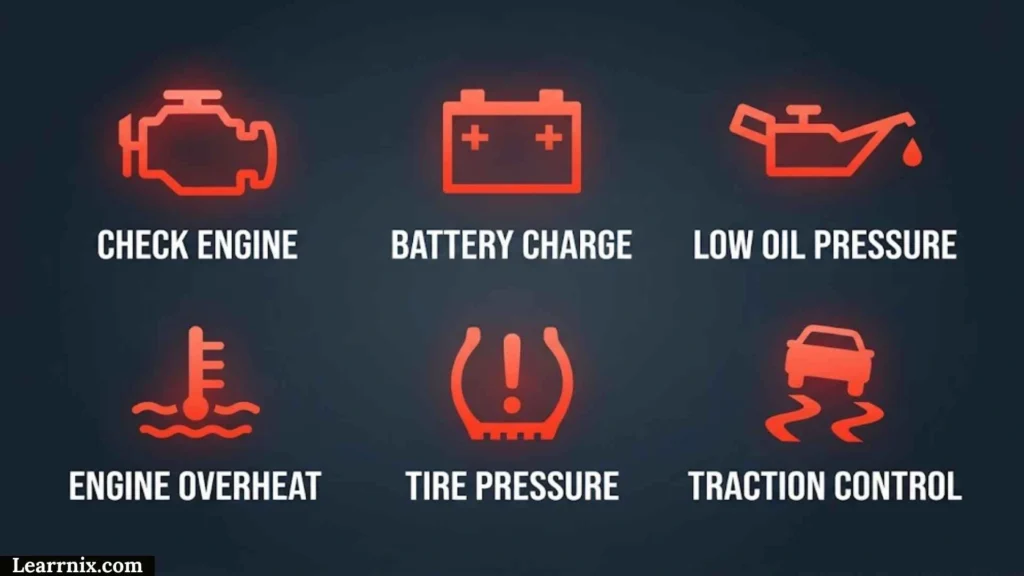
The check-engine symbol usually looks like a small engine outline. It can indicate a problem detected by the engine or emissions monitoring system.
A steady light can have many possible causes, while a flashing check-engine light may indicate a more serious condition. The vehicle should be checked according to the manufacturer’s instructions.
Oil Pressure Symbol
The oil-pressure warning usually looks like an oil can with a drop underneath or beside it. If this warning stays illuminated while the engine is running, it can indicate insufficient oil pressure.
Because low oil pressure can cause serious engine damage, this warning should not be ignored.
Battery Symbol
The battery warning normally resembles a rectangular battery with positive and negative signs. Despite its name, this warning does not always mean the battery itself is defective.
It can indicate a problem with the vehicle’s charging system, including the alternator or related electrical components.
Engine Temperature Symbol
The temperature warning commonly shows a thermometer over waves. It can indicate that the engine coolant temperature is too high.
If the vehicle is overheating, continuing to drive can result in serious engine damage. Follow the instructions in the owner’s manual and stop safely when required.
Tire Pressure Symbol
The tire-pressure warning usually looks like a horseshoe or tire outline with an exclamation mark in the center.
It commonly indicates that one or more tires have low pressure. It can also appear when the tire-pressure monitoring system detects a problem.
Brake Warning Symbol
Brake warnings may use an exclamation mark inside a circle, the word “BRAKE,” or another manufacturer-specific design.
The light may simply indicate that the parking brake is engaged, but it can also indicate a brake-system issue.
ABS Symbol
The ABS symbol commonly contains the letters “ABS” inside a circle. If it remains illuminated after the vehicle starts, the anti-lock braking system may have detected a fault.
The exact response depends on the vehicle, so check the owner’s manual before continuing to drive normally.
Car Dashboard Symbols With Names and Meanings
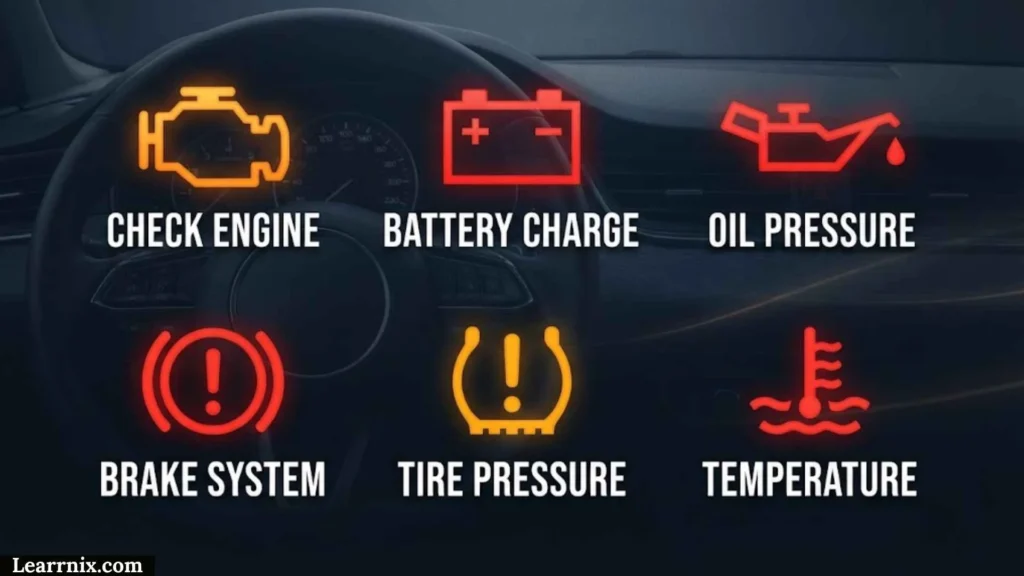
Knowing both the name and meaning of a dashboard symbol makes it easier to understand what your vehicle is communicating.
Red Dashboard Symbols
Red warning lights generally indicate conditions that deserve immediate attention.
Common examples include:
- Oil Pressure Warning: Possible low engine oil pressure.
- Engine Temperature Warning: Possible overheating.
- Brake Warning: Brake system or parking-brake warning.
- Battery Warning: Possible charging-system problem.
- Seat Belt Warning: A seat belt needs to be fastened.
- Door-Open Warning: A door, trunk, or hood may not be completely closed.
A red light should not automatically be assumed to mean that the vehicle will stop immediately. However, the driver’s response should be based on the specific symbol and the instructions provided by the manufacturer.
Yellow and Amber Dashboard Symbols
Yellow or amber warnings commonly indicate that a system needs attention or inspection.
Examples include:
- Check engine
- ABS
- Tire pressure
- Traction control
- Stability control
- Low fuel
- Diesel particulate filter
- Maintenance warnings
Some amber lights may allow you to continue driving carefully, while others require prompt inspection.
Green and Blue Dashboard Symbols
Green and blue lights are commonly used as status indicators.
Examples include:
- Turn signals
- Low-beam headlights
- Cruise control
- High-beam headlights
- Certain driver-assistance features
These colors generally indicate that a function is active rather than reporting a serious fault.
Yellow Car Warning Lights Meaning
Yellow or amber dashboard lights usually mean that the vehicle has detected a condition that requires attention. The urgency depends on the particular symbol, whether it is flashing, and how the vehicle is behaving.
Check Engine Light
The check-engine light can indicate a problem involving the engine, emissions system, sensors, fuel system, ignition system, or another monitored component.
A steady warning and a flashing warning should not be treated as identical. If the light is flashing or the vehicle is running poorly, seek professional assistance promptly.
ABS Warning Light
An ABS warning can indicate a problem with the anti-lock braking system. The vehicle may still have conventional braking, but the anti-lock function may not operate as intended.
Tire Pressure Warning
This warning commonly means that one or more tires have low air pressure. Check the tire pressures according to the vehicle manufacturer’s specifications.
If the pressures are correct but the warning remains, the tire-pressure monitoring system may need inspection.
Traction or Stability Warning
A traction or stability symbol may flash when the system is actively helping maintain traction. If it remains illuminated unexpectedly, the system may be disabled or may have detected a fault.
Diesel Particulate Filter Warning
Diesel vehicles equipped with a particulate filter may display a DPF warning when regeneration is required or when the system detects a problem.
Always follow the vehicle manufacturer’s specific instructions rather than assuming that one driving procedure works for every diesel vehicle.
Toyota Indicator Car Dashboard Symbols and Meanings
Toyota vehicles use many familiar dashboard symbols, but the exact symbols and warning messages depend on the model, year, engine, trim level, and market.
Some commonly encountered Toyota indicators include:
| Toyota Symbol or Indicator | General Meaning |
| Engine-shaped warning | Engine or emissions-related fault |
| Oil pressure symbol | Low engine oil pressure warning |
| Battery symbol | Charging-system warning |
| ABS | Anti-lock braking system warning |
| Tire-pressure symbol | Low tire pressure or TPMS warning |
| Brake warning | Brake system or parking-brake warning |
| Slip indicator | Traction or stability-system activity |
| Master warning triangle | A warning message requires attention |
| Seat belt symbol | Seat belt reminder |
| High-beam symbol | High beams are active |
| Turn arrows | Turn signals are operating |
Some Toyota vehicles can also display symbols for advanced systems such as lane-departure assistance, adaptive cruise control, pre-collision technology, parking assistance, or hybrid-system functions.
A flashing indicator can have a different meaning from a continuously illuminated warning. For example, a stability-control indicator may flash when the system is actively helping the vehicle maintain traction.
For an exact interpretation, always check the owner’s manual for the specific Toyota model.
Diesel Car Dashboard Symbols and Meanings
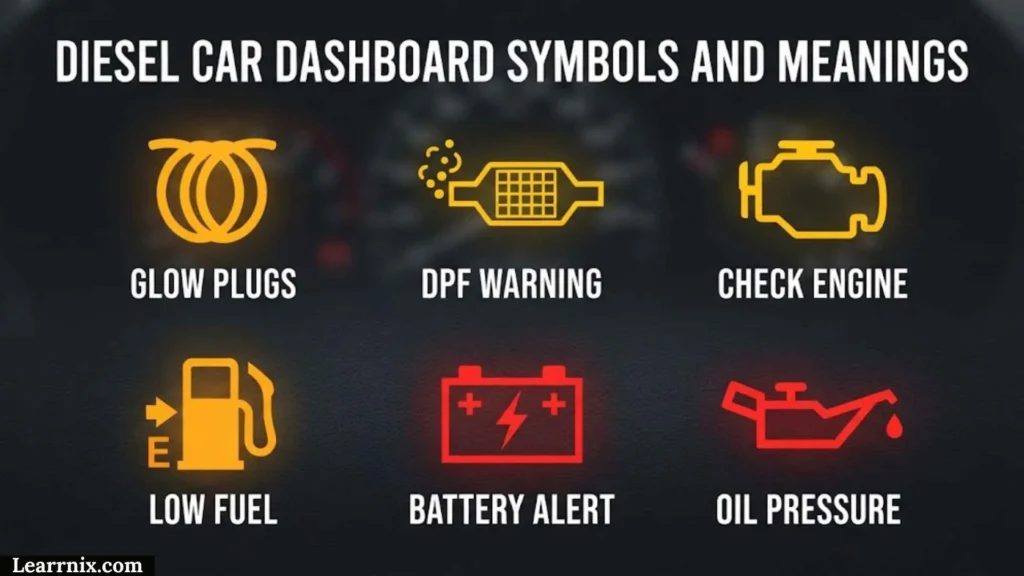
Diesel vehicles share many common dashboard symbols with gasoline-powered cars, but they can also have additional indicators related to diesel engine systems.
Diesel Glow Plug Symbol
The glow-plug indicator commonly looks like a small coil or loop.
It can illuminate when the ignition is switched on before starting the engine. This is particularly relevant to diesel engines because glow plugs assist with starting under certain conditions.
If the indicator remains illuminated or begins flashing after the engine starts, check the vehicle’s manual for the appropriate procedure.
Diesel Particulate Filter Symbol
The diesel particulate filter, commonly called a DPF, captures soot from diesel exhaust.
A DPF warning can indicate that regeneration is required or that the system has detected an issue. The correct procedure varies between vehicles, so drivers should follow the manufacturer’s instructions.
Water in Fuel Warning
Some diesel vehicles have a warning for water detected in the fuel filter. This symbol is not universal, so its exact appearance and meaning depend on the manufacturer.
AdBlue or Diesel Exhaust Fluid Warning
Some modern diesel vehicles use a diesel exhaust fluid system, often marketed under names such as AdBlue. Vehicles equipped with this technology can display warnings when the fluid level is low or when the system detects a fault.
Other Diesel Dashboard Warnings
Diesel cars can also display:
- Check engine warning
- Oil pressure warning
- Engine temperature warning
- Battery warning
- ABS warning
- Brake warning
- Tire-pressure warning
- DPF warning
- Glow-plug warning
- Diesel exhaust-fluid warning
Because diesel systems differ between manufacturers, a persistent or flashing diesel-specific warning should be checked against the exact vehicle manual.
Car Dashboard Symbols and Meanings Nissan
Nissan vehicles use many widely recognized dashboard symbols, but the exact graphics and warning messages can vary by model and model year.
Common Nissan dashboard indicators include:
| Nissan Symbol or Indicator | General Meaning |
| Master warning | A warning message requires attention |
| Malfunction indicator light | Engine or emissions-related fault |
| Oil pressure warning | Possible low engine oil pressure |
| Charge warning | Possible charging-system problem |
| ABS warning | Possible ABS fault |
| Brake warning | Brake system or parking-brake warning |
| Tire-pressure warning | Low tire pressure or TPMS warning |
| Slip indicator | Traction or stability-system activity |
| Airbag warning | SRS or airbag-system warning |
| Security indicator | Security or immobilizer status |
| High-beam indicator | High beams are active |
| Turn signal arrows | Turn signals are operating |
Nissan vehicles may also display indicators for driver-assistance features such as lane systems, intelligent cruise control, blind-spot monitoring, automatic emergency braking, and other safety technologies.
One useful feature on many modern vehicles is the information display. When a warning symbol appears alongside a text message, read the message carefully because it can provide more specific information than the symbol alone.
If a warning remains illuminated after starting the vehicle, consult the owner’s manual for the exact model rather than relying only on a general dashboard-symbol chart.
FAQ
What Do the Different Car Dashboard Light Colors Mean?
Red dashboard lights generally indicate a condition requiring prompt attention. Yellow or amber lights commonly indicate a warning or system that needs inspection. Green and blue lights are usually used to show that a feature is active.
Which Car Dashboard Warning Lights Should I Never Ignore?
Oil pressure, overheating, serious brake warnings, and other red warnings deserve immediate attention. A flashing check-engine light can also indicate a serious problem. Always consider the symbol together with the vehicle’s behavior and owner’s manual.
Why Is My Check Engine Light On?
A check-engine light can appear because the vehicle’s engine or emissions system has detected a fault. Possible causes range from sensors and ignition components to emissions-related problems. A diagnostic scan is normally needed to identify the exact cause.
Are Toyota and Nissan Dashboard Symbols the Same?
Many basic dashboard symbols are similar because manufacturers use widely recognized conventions. However, Toyota and Nissan can use different graphics, colors, warning messages, and manufacturer-specific indicators.
Can I Drive With a Yellow Dashboard Warning Light?
It depends on the specific warning. Some yellow indicators allow cautious driving, while others require prompt inspection. If the warning is flashing or accompanied by overheating, smoke, unusual noise, loss of power, or another serious symptom, stop safely and seek assistance.
Conclusion
Indicator car dashboard symbols provide important information about your vehicle’s systems and operating conditions. Understanding common symbols for the engine, oil, battery, brakes, tires, temperature, ABS, traction control, and lighting can help you recognize warnings more confidently.
Toyota, Nissan, diesel, and other vehicles share many basic dashboard symbols, but manufacturer-specific indicators can differ. Yellow and amber lights commonly require attention, while red warnings can indicate conditions that need a more immediate response.
When an unfamiliar dashboard symbol appears, first look at its shape and color, then check the vehicle’s information display and owner’s manual. Using the correct symbol meaning instead of guessing can help you make a safer and more informed decision about what to do next.

I am Daniel Harper, an education enthusiast and writer who enjoys creating helpful content to make learning more accessible and engaging.
I focus on sharing knowledge about effective study methods, educational growth, and skills that help learners succeed in a changing world.
Through my writing, I aim to inspire students to explore new ideas and develop a passion for learning.
Books by Daniel Harper:
- The Path to Lifelong Learning
- Unlocking Your Learning Potential
 Michael Carter
 Charlotte Anderson