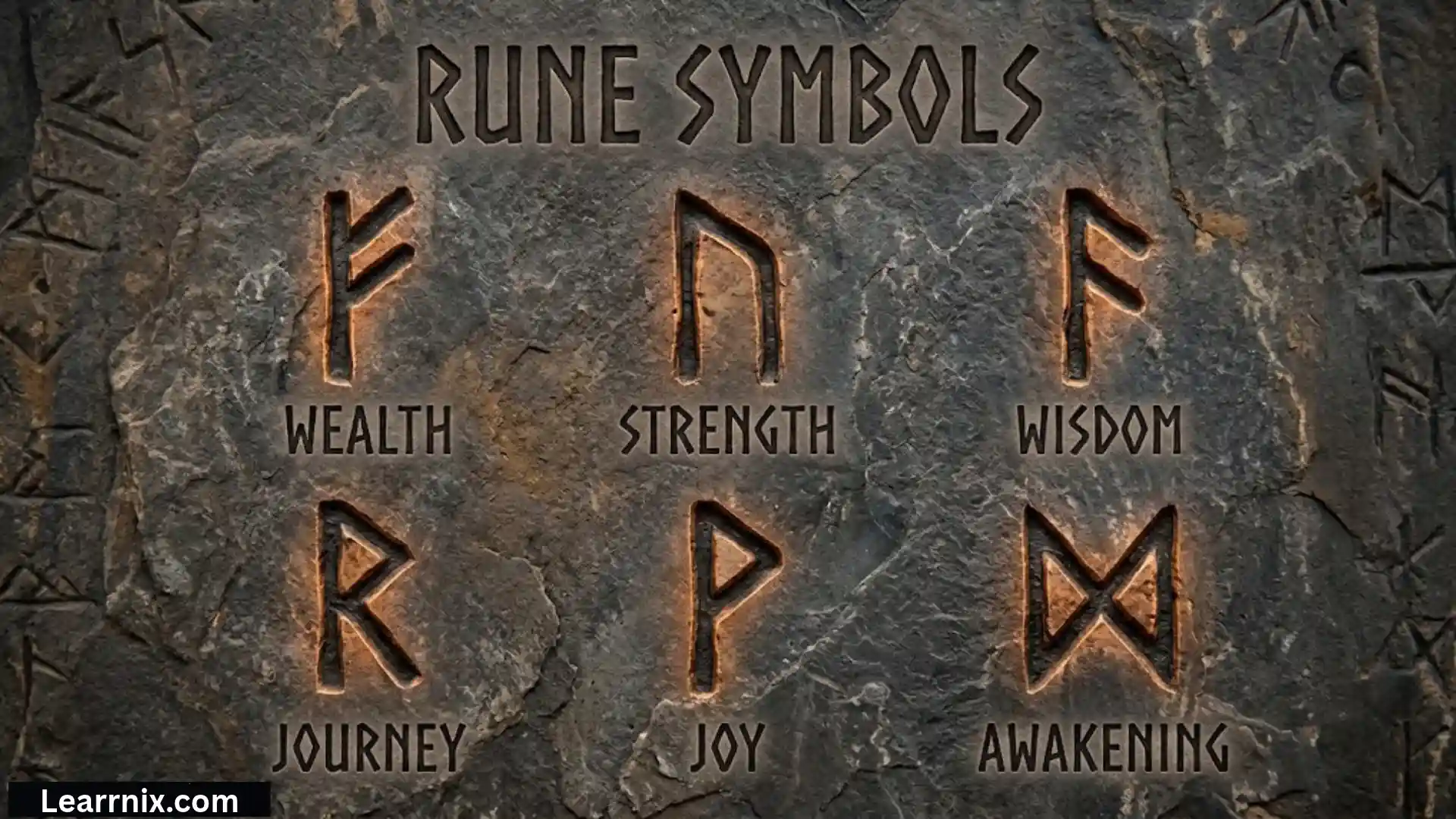
Rune symbols are ancient characters that carry meanings connected to language, history, spirituality, and cultural traditions. Many people search for rune symbols to understand their original meanings, explore Norse mythology, find symbols associated with love and protection, or copy interesting characters for creative projects.
Runes are best known from Germanic languages and the Viking Age, when they were carved into stones, weapons, jewelry, and everyday objects. Different runic alphabets developed over time, and their characters were used for writing names, messages, memorials, and other inscriptions. Some runes later became associated with ideas such as strength, luck, and spiritual protection.
In this guide, you will discover rune symbols and their meanings, explore Norse, Viking, Celtic, Nordic, and Icelandic traditions, and learn how to use rune-inspired characters in text and designs. You will also find practical guidance for copying symbols, understanding magical interpretations, and creating your own rune-inspired designs without confusing modern symbolism with historical facts.
Rune Symbols and Meanings
Runes are characters from ancient writing systems used by Germanic-speaking peoples. Their shapes are often made from straight lines because they were suitable for carving into wood, stone, bone, and metal. The word rune is associated with a Germanic word meaning a secret or mystery, although the characters themselves were primarily used for writing.
The most widely recognized runic systems include the Elder Futhark, the Younger Futhark, and the Anglo-Saxon Futhorc. The Elder Futhark contains 24 runes, while the Viking Age Younger Futhark contains 16. Their characters and historical uses differ, so not every rune belongs to every runic alphabet.
Common Rune Symbols and Their Meanings
| Rune | Traditional Name | Common Modern Association |
| ᚠ | Fehu | Wealth, cattle, resources, prosperity |
| ᚢ | Uruz | Strength, vitality, endurance |
| ᚦ | Thurisaz | Giants, force, defense, challenges |
| ᚨ | Ansuz | A god, speech, communication |
| ᚱ | Raidō | Riding, travel, a journey |
| ᚲ | Kenaz | Torch, knowledge, creativity |
| ᚷ | Gebo | Gift, exchange, partnership |
| ᚹ | Wunjo | Joy, harmony, well-being |
| ᛉ | Algiz | Often associated with protection today |
| ᛊ | Sowilo | Sun, brightness, success |
| ᛏ | Tiwaz | The god Týr, justice, courage |
| ᛒ | Berkano | Birch, growth, renewal |
| ᛗ | Mannaz | Humanity, people, community |
| ᛚ | Laguz | Water, lakes, flowing movement |
| ᛞ | Dagaz | Day, daylight, transformation |
| ᛟ | Othala | Inherited property, ancestral heritage |
The table draws on commonly used names and historical associations from the Elder Futhark. Modern meanings such as success, protection, and personal transformation should be understood as interpretive extensions, not fixed translations shared by every historical culture.
A rune’s meaning depends on the writing system, language, inscription, and historical period. If you are studying an actual runic inscription, its context is more reliable than a modern spiritual meaning chart.
Rune Symbols for Good Luck
Rune symbols for good luck are popular in jewelry, tattoos, artwork, journals, and personal decorations. Some people use runes as reminders of goals, confidence, prosperity, or positive change. However, there is no historical evidence that a particular rune universally guarantees luck.
These are some runes commonly associated with fortunate outcomes in modern rune-inspired practices:
- ᚠ Fehu: Associated with movable wealth, cattle, resources, and prosperity.
- ᚹ Wunjo: Represents joy and well-being in interpretations based on its name and historical context.
- ᛃ Jera: Associated with the year, harvest, cycles, and the results of sustained effort.
- ᛊ Sowilo: Connected with the sun and often interpreted as energy, success, or achievement.
- ᚷ Gebo: Represents a gift and is often used to express generosity, reciprocity, or a beneficial partnership.
For example, someone starting a business might choose Fehu as a personal reminder to manage resources wisely. A student might select Jera to represent patience and the rewards of consistent study.
You can place a rune-inspired design on a notebook, use it in a digital mood board, or include it in a handmade gift. Treat the symbol as a personal reminder rather than a promise that an event will happen.
Rune Symbols Copy and Paste
If you want rune symbols for social media, messages, usernames, captions, or artwork, the characters below can be copied directly. Keep in mind that the appearance of each character depends on the font, device, and application.
Elder Futhark Runes to Copy
Select and copy the characters you want.
ᚠ ᚢ ᚦ ᚨ ᚱ ᚲ ᚷ ᚹ
ᚺ ᚾ ᛁ ᛃ ᛇ ᛈ ᛉ ᛊ
ᛏ ᛒ ᛖ ᛗ ᛚ ᛜ ᛞ ᛟ
Copy Elder Futhark Runes
Individual Rune Symbols
| Symbol | Name | Common Use |
| ᚠ | Fehu | Prosperity-themed designs |
| ᚷ | Gebo | Gifts and relationships |
| ᚹ | Wunjo | Happiness-themed artwork |
| ᛉ | Algiz | Modern protection symbolism |
| ᛏ | Tiwaz | Courage and determination |
| ᛊ | Sowilo | Sun-inspired designs |
| ᛒ | Berkano | Growth and renewal |
| ᛟ | Othala | Heritage-themed designs |
How to Use Them: Highlight a character or use the copy control above, then paste it into your preferred text editor or design tool. If a character appears as an empty box, try a font that supports the Runic Unicode block. Some platforms may substitute a different font or omit the character entirely.
These are actual Unicode runic characters, but copying a rune does not automatically preserve its historical meaning. For names or full words, choose the correct runic system and transliteration rather than replacing ordinary letters with runes at random.
Viking Rune Symbols and Meanings
Viking rune symbols are often seen in modern artwork, historical fiction, games, tattoos, and Scandinavian-inspired decorations. Historically, Vikings used runes as part of a writing tradition rather than as a universal code of magical symbols.
Runestones are among the best-known examples of Viking Age runic writing. Many commemorate individuals, describe family relationships, or record journeys and achievements. Some inscriptions also reflect religious beliefs and the changing cultural environment of Scandinavia.
Common Viking-Age Rune Examples
| Rune | Historical Context | Modern Association |
| ᚠ | Older rune for cattle or movable wealth | Prosperity |
| ᚱ | Rune associated with riding | Travel and progress |
| ᛏ | Associated with Týr in the older tradition | Courage and justice |
| ᛒ | Birch-related rune | Growth |
| ᛚ | Water-related rune | Flow and change |
These examples include characters from the older Elder Futhark tradition. They should not all be treated as exact representations of the Viking Age Younger Futhark. The writing systems changed, and some rune shapes or values differ between them.
For historical accuracy, use photographs or scholarly transcriptions of actual inscriptions when reproducing Viking writing. For decorative work, make it clear when a design is inspired by Viking culture rather than copied from a historical artifact.
Rune Symbols for Love
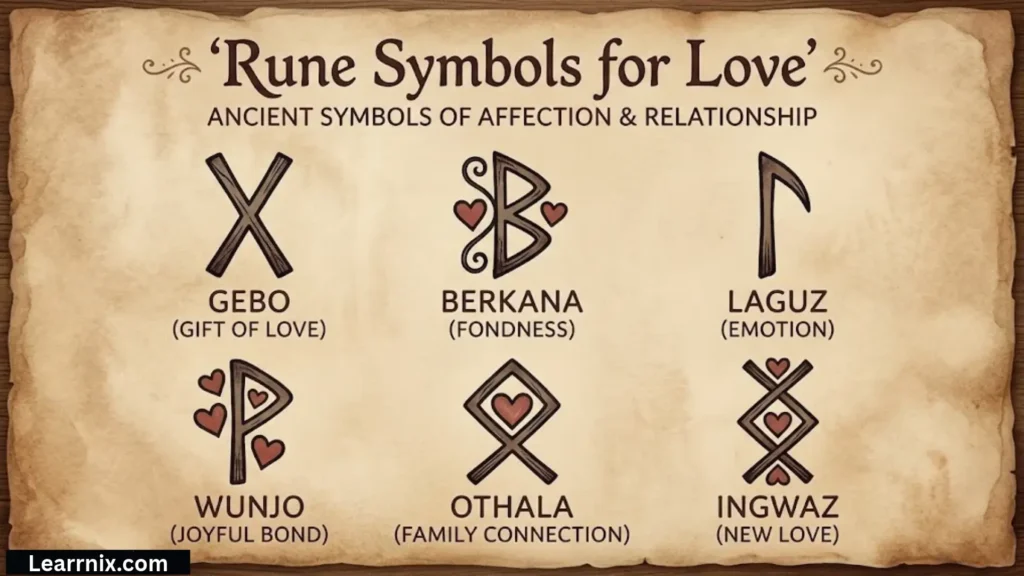
Rune symbols for love are commonly used in couple tattoos, anniversary gifts, romantic artwork, and personalized jewelry. Their meanings are often based on modern spiritual interpretations of runes rather than direct historical evidence of a dedicated love alphabet.
These runes are popular choices for expressing affection or connection:
- ᚷ Gebo: The idea of a gift or exchange makes this rune a natural modern symbol for mutual affection, generosity, and partnership.
- ᚹ Wunjo: Associated with joy, it can represent happiness shared between two people.
- ᛒ Berkano: Often interpreted in modern practice as growth, care, and new beginnings.
- ᛗ Mannaz: Connected with humanity, it can symbolize understanding, companionship, and the human side of relationships.
For a romantic design, Gebo is an especially recognizable choice because its name is associated with a gift. You could use it in a handmade card or include it in a small piece of decorative artwork.
Some modern rune practitioners combine multiple characters into a design called a bind rune. A bind rune joins two or more runes into one graphic, often to express a personal intention. These combinations can be meaningful to their creators, but they should not be presented as universally recognized ancient love symbols.
Rune Symbols for Protection
Protection rune symbols appear in contemporary spiritual practices, fantasy designs, jewelry, and tattoos. People may use them to express safety, resilience, courage, or the desire to feel secure.
Algiz (ᛉ) is particularly associated with protection in modern rune interpretation. However, the historical uses and interpretations of this character are more complicated than the simple meaning often shown in online charts.
Other runes may be chosen for related personal themes:
- ᛏ Tiwaz: A modern choice for courage, discipline, and standing firm.
- ᚢ Uruz: Often interpreted as strength, endurance, and vitality.
- ᚦ Thurisaz: Connected with thurs or giant-related terminology in the older tradition; modern interpretations sometimes associate it with defense or confronting challenges.
- ᛊ Sowilo: Commonly used to express light, confidence, or positive energy.
If you want a protection-inspired symbol, first decide what protection means to you: physical safety, emotional boundaries, courage, or spiritual reassurance. Choosing a rune as a personal reminder can be meaningful, but a rune cannot guarantee safety or prevent harm.
Viking Rune Symbols and Meanings
This heading covers the practical side of identifying Viking runes and understanding how their meanings differ from modern interpretations.
Viking Age inscriptions most commonly used the Younger Futhark. Its 16 runes represented the sounds of Old Norse writing, although their pronunciation and use depended on context. The characters were carved into memorial stones, tools, jewelry, and other objects.
Some important distinctions help prevent common mistakes:
- Historical Writing: A rune may represent a sound or group of sounds in an inscription.
- Rune Names: The names of runes provide clues to their historical associations, but the full names are not necessarily written out in every inscription.
- Modern Symbolism: Contemporary charts may connect runes with love, luck, strength, or spiritual intentions.
- Runic Artwork: A decorative arrangement can be inspired by Viking culture without being an authentic Old Norse phrase.
The same character may be discussed differently in a historical study and a modern spiritual guide. Neither should be confused with a verified translation of an inscription. If you are designing a Viking-inspired tattoo, check the runic alphabet, intended wording, and direction of writing before making it permanent.
Viking Rune Symbols
Viking rune symbols are recognizable for their angular lines and historical connection with Scandinavia. The Younger Futhark is the most relevant starting point for understanding runes from the Viking Age.
Here is a small selection of characters from the Younger Futhark:
| Rune | Approximate Transliteration | Note |
| ᚠ | f | Represents a runic sound value associated with f |
| ᚢ | u | Represents a sound commonly transliterated as u |
| ᚦ | þ | Represents the sound written as th in English transliteration |
| ᚱ | r | Represents an r sound |
| ᚴ | k | Represents a k sound |
| ᛏ | t | Represents a t sound |
These examples are useful for recognizing runic writing, but a complete transliteration requires the appropriate historical system. Transliteration is not always a simple one-to-one replacement of modern English letters.
For social media and creative projects, individual rune characters can add a historical or Nordic-inspired appearance. For actual names, inscriptions, or meaningful phrases, consult the relevant runic alphabet instead of relying on a decorative symbol generator.
Norse Rune Symbols
Norse rune symbols can refer to runic writing used in Scandinavia as well as to symbols associated with Norse culture. The distinction matters because Norse mythology contains many important symbols that are not runes.
For example, the hammer of Thor, commonly known as Mjölnir, is a mythological object rather than a rune. Likewise, the Valknut is a symbol found in some archaeological and artistic contexts, not a character in the runic alphabet.
Runes themselves were letters used for writing. Some had names connected to everyday objects, natural features, or religious figures. These names have inspired modern symbolic interpretations, but not every popular Norse symbol belongs to the runic system.
If your goal is to represent Norse mythology, you might choose a mythological symbol. If your goal is to write a name in runes, you need the appropriate historical alphabet and transliteration. Understanding the difference makes your design more accurate and meaningful.
Celtic Rune Symbols
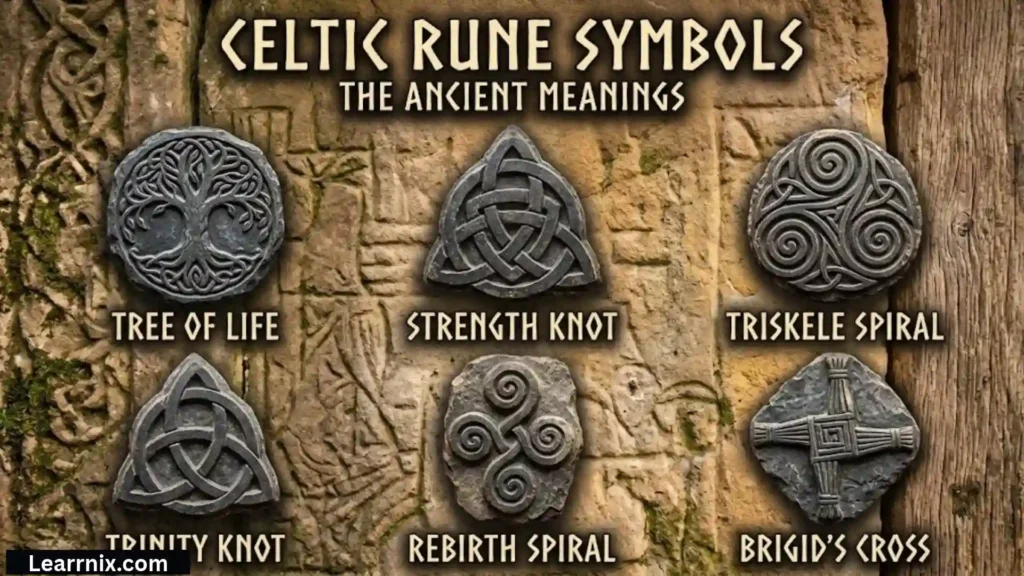
The phrase Celtic rune symbols appears frequently in searches for ancient European symbols, tattoos, and spiritual artwork. However, the historical distinction between Celtic traditions and Germanic runic writing is important.
Celtic languages and cultures had their own writing traditions. Ogham, an early medieval alphabet associated especially with Ireland and parts of Britain, is often confused with runes because both systems can be represented by distinctive linear marks.
Ogham is not a runic alphabet. Its letters are formed using strokes arranged along a central line or stem, while runic characters generally have angular shapes suitable for carving.
Some modern websites label decorative designs as Celtic runes, but the phrase does not identify one universally accepted historical alphabet. If you want an authentic Celtic inscription, research the appropriate language and writing system. If you prefer a fantasy-inspired design, you can combine Celtic-inspired patterns with runic elements, provided you do not claim that the result is a verified ancient inscription.
Nordic Rune Symbols
Nordic rune symbols are generally associated with the runic traditions of northern Europe, especially Scandinavia. The term is often used broadly in searches for Norse characters, Viking-inspired designs, and Nordic cultural imagery.
The Elder Futhark and Younger Futhark are two major systems worth distinguishing. The Elder Futhark was used earlier and contains 24 runes. The Younger Futhark developed later and was widely used during the Viking Age, with 16 runes.
Nordic-inspired rune designs can be used for:
- Jewelry and engraved pendants.
- Decorative lettering and artwork.
- Historical illustrations and educational materials.
- Fictional characters and fantasy worldbuilding.
- Personal reminders of qualities such as persistence or courage.
When choosing a symbol, consider whether historical authenticity or modern personal meaning is more important to your project. A modern interpretation may suit a personal design, while a museum-style illustration or historical reconstruction requires greater attention to the period and writing system.
Ancient Rune Symbols
Ancient rune symbols are among the earliest known writing characters used by Germanic peoples. The earliest runic inscriptions date to the first centuries CE, although the exact origins and development of the runic alphabet remain subjects of historical study.
The Elder Futhark is the earliest major runic alphabet, containing 24 characters. It was used across parts of northern and central Europe before later systems developed.
Runes have been found on a variety of objects, including:
- Stones and memorial monuments.
- Weapons and tools.
- Combs, brooches, and other personal items.
- Wooden objects and bone fragments.
- Objects bearing names, ownership marks, or short inscriptions.
The surviving evidence shows that runes served practical purposes. Some inscriptions may have had religious or ritual significance, but it would be inaccurate to describe every ancient rune as magical.
Runic writing also changed over time. Characters, sound values, and writing conventions varied between periods and regions. This is why a rune chart intended for historical research should identify the alphabet it represents rather than presenting all runes as one timeless system.
Protection Rune Symbols
Protection rune symbols overlap with the broader category of runes used in modern spiritual and personal practices, but this section focuses on choosing a symbol for a specific purpose.
Here are three popular options and how people commonly interpret them today:
| Symbol | Name | Modern Protective Theme |
| ᛉ | Algiz | Awareness, boundaries, protection |
| ᛏ | Tiwaz | Courage, discipline, standing firm |
| ᚢ | Uruz | Inner strength, resilience, endurance |
Algiz is often selected for protection-themed jewelry or tattoos. Tiwaz may suit a design representing bravery, while Uruz can serve as a reminder to remain resilient during difficult periods.
These associations are useful for understanding modern rune symbolism, but they should not be confused with proven historical meanings or practical safety measures. A symbol can express an intention without guaranteeing a particular outcome.
If you plan to use a protection rune in a tattoo, check its historical background and the specific form you intend to reproduce. Some modern designs use stylized or combined shapes that differ from historical characters.
Icelandic Rune Symbols and Meanings
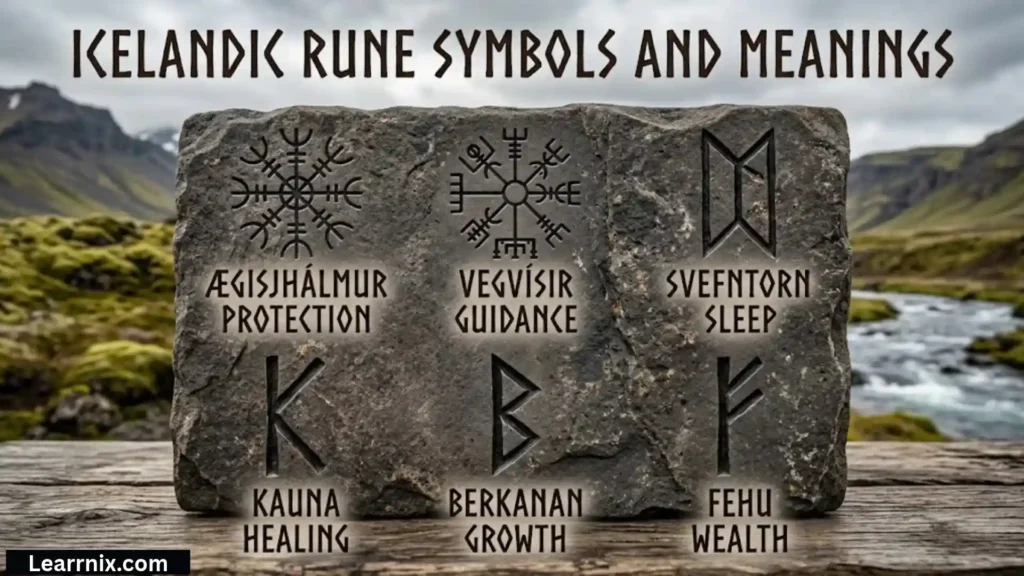
Icelandic rune symbols are connected with Iceland’s history, medieval manuscripts, and the broader development of runic writing in northern Europe. Iceland was settled during the Viking Age, and runic traditions formed part of the wider Scandinavian cultural world.
The Younger Futhark was important during the Viking Age. Later, medieval runic writing developed additional forms and conventions. Iceland also became known for manuscript traditions that preserved Old Norse literature, including stories about gods, heroes, and legendary events.
It is useful to distinguish historical runes from later Icelandic magical signs. Some symbols found in Icelandic magical manuscripts are known as galdrastafir, a term associated with magical staves or signs. These are not simply another version of the standard runic alphabet.
For example, the well-known Icelandic magical stave called Ægishjálmur, often translated as the Helm of Awe, appears in later Icelandic magical traditions. It is not an individual rune in the Elder Futhark or Younger Futhark.
If you are searching for Icelandic symbols, identify whether you want a historical runic character, an Old Norse inscription, or a later magical stave. These categories have different origins and should not be treated as interchangeable.
How to Make Your Own Rune Symbols
Creating your own rune-inspired symbols is a useful way to personalize artwork, jewelry, notebooks, logos, and fictional writing systems. The key is to distinguish an original design from a historically authentic rune.
Step 1: Choose the Meaning
Start with one clear idea, such as courage, friendship, renewal, or perseverance. A specific intention gives your design a purpose and helps you decide which shapes or existing symbols might inspire it.
Step 2: Research Existing Runes
Study the Elder Futhark or Younger Futhark if you want a historically inspired starting point. Learn the original rune names and sound values, and avoid assuming that modern spiritual meanings were universally used in ancient times.
Step 3: Sketch Simple Shapes
Use straight lines, diagonal strokes, and balanced forms. Traditional runes often use angular shapes, but your original symbol can follow your own design preferences. Make several sketches before choosing a final version.
Step 4: Combine Shapes Carefully
You can create an original emblem by combining lines, geometric patterns, or selected rune-inspired elements. If you combine existing runes into one design, describe it as a modern creation unless you have evidence that the same form was historically used.
Step 5: Test the Design
Draw the symbol at different sizes and try it in black and white. Check whether the lines remain clear on a phone screen, printed page, pendant, or tattoo stencil.
Step 6: Give It a Clear Description
Write down what the symbol represents and how you developed it. This prevents confusion later and helps others understand that it is your personal design rather than an established ancient character.
Practical Tip: If you create a new rune-inspired graphic, you can save it as an image for consistent display. An original drawing does not automatically have a Unicode character, so it may not work as ordinary copy-and-paste text.
Norse Rune Symbols and Meanings
Norse rune symbols and meanings are best understood by separating the history of the writing system from modern interpretations of individual characters.
The Younger Futhark is central to the Viking Age, while the Elder Futhark belongs to an earlier period. Their characters do not always have identical shapes or sound values. This distinction matters when translating names, reproducing inscriptions, or making historically informed designs.
A few common examples illustrate how context influences interpretation:
- ᚠ Fehu: In the older runic tradition, its name is associated with cattle and movable wealth. Modern users often extend this to prosperity.
- ᚱ Raidō: Its name is associated with riding. Modern interpretations may connect it with journeys or progress.
- ᚷ Gebo: Associated with a gift, it is often used in modern designs about giving and receiving.
- ᛏ Tiwaz: Named after Týr in the older tradition, it is frequently connected with courage and justice in modern symbolism.
- ᛟ Othala: Associated with inherited property or ancestral heritage in the older tradition, it can be used today to represent family history.
These examples are not a universal dictionary of Norse spirituality. An actual inscription should be interpreted according to its date, language, location, and surrounding text.
For readers interested in Norse culture, studying both the runes and the archaeological evidence provides a more reliable understanding than relying on modern meaning charts alone.
Nordic Rune Symbols and Meanings
Nordic rune symbols and meanings are popular subjects for people exploring Scandinavian history, spiritual traditions, and minimalist designs. Their meanings depend on which runic alphabet is being discussed and whether the goal is linguistic interpretation or modern symbolism.
The following examples summarize some familiar Elder Futhark characters:
| Rune | Name | Historical Association | Common Modern Interpretation |
| ᚠ | Fehu | Cattle, movable wealth | Prosperity |
| ᚢ | Uruz | Aurochs | Strength |
| ᚷ | Gebo | Gift | Partnership |
| ᚹ | Wunjo | Joy | Happiness |
| ᛃ | Jera | Year | Patience and harvest |
| ᛊ | Sowilo | Sun | Energy and achievement |
| ᛞ | Dagaz | Day | Change and new beginnings |
The historical associations are based on rune names and related linguistic evidence, while the modern interpretations reflect common contemporary uses. These categories should remain separate when accuracy matters.
You can use these meanings as inspiration for personal artwork or journaling. For instance, Jera may remind you that worthwhile results often require time, while Gebo may represent a relationship built on generosity and mutual respect.
Magic Rune Symbols
Magic rune symbols are associated with spiritual practices, divination, folklore, and modern interpretations of ancient runic characters. Some people use runes as reflective tools, while others incorporate them into fantasy stories, games, jewelry, or ritual-inspired artwork.
Historically, runic inscriptions sometimes appeared in religious or potentially magical contexts. However, the evidence does not support the idea that every rune had one fixed magical power or that all ancient people used runes in the same way.
Modern rune practices may involve drawing a character, selecting a rune for reflection, or arranging multiple runes into a bind rune. A person might choose Jera to think about patience or Gebo to reflect on giving and receiving. These are contemporary interpretive practices rather than guaranteed supernatural effects.
It is also helpful to distinguish runes from Icelandic magical staves. A rune belongs to a writing system, whereas a magical stave is a distinct type of sign that may have a different historical origin.
If you enjoy magical symbolism, approach it with cultural awareness and curiosity. Learn the historical background, check the source of the interpretation, and be cautious of claims that a rune can guarantee wealth, attract a partner, heal illness, or protect someone from danger.
Frequently Asked Questions
What are rune symbols used for?
Runes were historically used for writing names, messages, memorial inscriptions, and other texts. Today, people also use them in historical research, jewelry, tattoos, decorative artwork, games, and modern spiritual practices.
Which rune symbol represents protection?
Algiz (ᛉ) is commonly associated with protection in modern rune interpretations. Its historical context is more complex, so it is best described as a modern protective symbol rather than a guaranteed source of safety.
Are Viking runes and Norse runes the same?
The terms overlap because Viking Age Scandinavians used runic writing associated with Norse culture. However, not every rune belongs specifically to the Viking Age, and the Younger Futhark is more directly associated with that period than the earlier Elder Futhark.
Can I copy and paste rune symbols into social media?
Yes, you can copy Unicode runic characters and paste them into many text fields. Their appearance depends on font and platform support, so some characters may display differently or appear as empty boxes.
Do rune symbols have magical powers?
There is no reliable scientific evidence that rune symbols possess supernatural powers. Some people use them as spiritual or reflective symbols, but their personal meaning should be distinguished from documented historical evidence.
Conclusion
Rune symbols offer a fascinating connection to ancient writing, Scandinavian history, mythology, and modern creative expression. From the Elder Futhark to the Viking Age Younger Futhark, each system has its own characters, historical background, and linguistic purpose.
For modern designs, runes are often associated with love, luck, protection, strength, prosperity, and personal growth. These interpretations can inspire tattoos, jewelry, social media posts, and artwork, but they should be distinguished from historically documented meanings. Copy-and-paste runes are useful for digital projects, provided your chosen platform supports the characters.
The best way to explore rune symbols is to combine curiosity with accuracy. Learn the differences between Norse runes, Viking writing, Celtic traditions, and Icelandic magical staves before choosing a design. Whether you want to study ancient inscriptions or create a personal symbol, understanding the history behind the shapes makes your choice more meaningful.

I am Daniel Harper, an education enthusiast and writer who enjoys creating helpful content to make learning more accessible and engaging.
I focus on sharing knowledge about effective study methods, educational growth, and skills that help learners succeed in a changing world.
Through my writing, I aim to inspire students to explore new ideas and develop a passion for learning.
Books by Daniel Harper:
- The Path to Lifelong Learning
- Unlocking Your Learning Potential
 Charlotte Anderson
 Michael Carter